
Losing one tooth can change more than your smile. It can affect how you chew, how clearly you speak, and how confident you feel when you laugh or take photos. A good single tooth replacement guide should make the decision feel less overwhelming by explaining your options in plain language and helping you understand what fits your health, budget, and comfort level.
For many patients, the hardest part is not the treatment itself. It is figuring out which option is actually right for them. The best choice depends on where the missing tooth is, the condition of the teeth next to it, your gum and bone health, and how quickly you want the tooth replaced.
Why replacing one missing tooth matters
When just one tooth is missing, it is easy to think it can wait, especially if the gap is toward the back. Sometimes patients are not in pain, so the problem does not feel urgent. But over time, the nearby teeth can start to shift into the space, which may affect your bite and make cleaning harder.
A missing tooth can also put more pressure on the surrounding teeth when you chew. In some cases, the opposing tooth may begin to move because it no longer has contact. If the tooth has been missing for a while, the jawbone in that area can begin to shrink as well. That is one reason early advice matters, even if you are not ready for treatment straight away.
Single tooth replacement guide: your main options
There are three common ways to replace a single missing tooth: a dental implant, a dental bridge, or a removable partial denture. Each has advantages, and each comes with trade-offs.
Dental implant
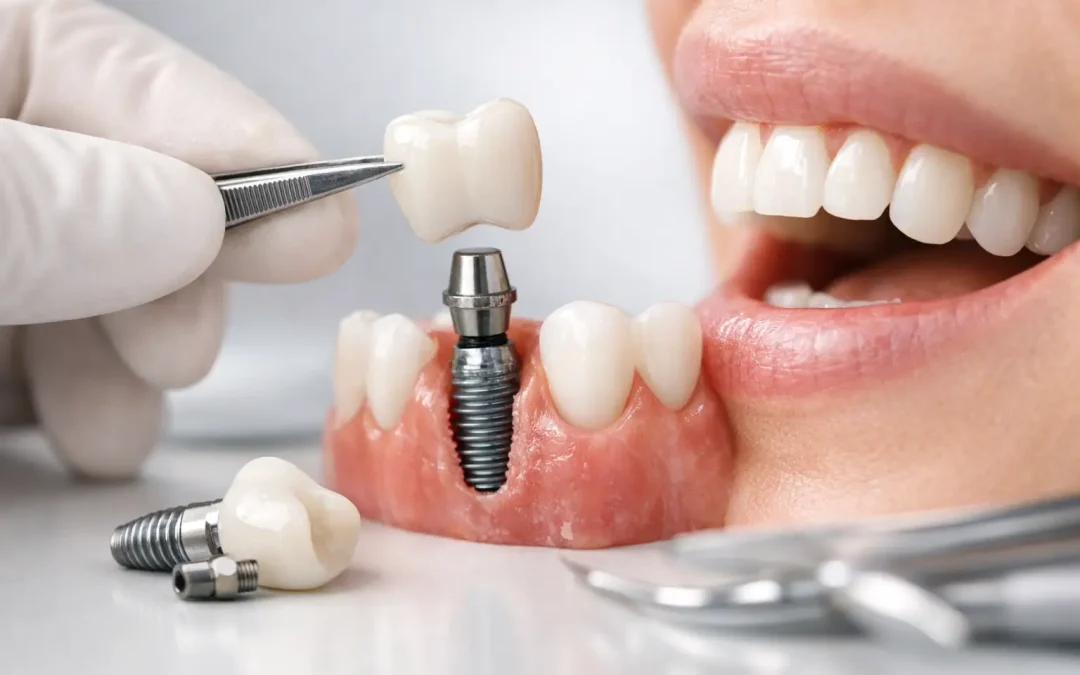
A dental implant replaces the tooth root as well as the visible tooth. A small titanium post is placed into the jawbone, and once it heals, a custom crown is attached on top. This option often feels the most like a natural tooth because it stands on its own and does not rely on the teeth beside it.
One of the main benefits of an implant is that it helps support the bone in the area. It also avoids cutting down neighboring healthy teeth, which matters if those teeth are otherwise strong and untouched. Many patients like implants because they are stable, long-lasting, and very natural in appearance.
That said, implants are not automatically the best fit for everyone. They usually take longer than other options because healing time is involved. They can also cost more upfront. If there is not enough bone in the area, additional treatment may be needed before the implant can be placed.
Dental bridge
A traditional dental bridge fills the gap by attaching a replacement tooth to crowns placed on the neighboring teeth. In the right case, a bridge can provide a fixed, natural-looking result without surgery.
Bridges can be a practical option when the teeth next to the gap already need crowns, or when an implant is not suitable due to health, bone, or budget reasons. Treatment time is often shorter than with an implant, and many patients appreciate that the tooth is fixed in place rather than removable.
The trade-off is that a bridge depends on the support teeth. That means those teeth usually need to be reshaped, even if they are otherwise healthy. Bridges also do not stimulate the jawbone in the same way an implant does.
Removable partial denture
A removable partial denture is a prosthetic tooth attached to a small appliance that can be taken in and out. This is often the most affordable way to replace one missing tooth, and it may be recommended as an interim option while planning more permanent treatment.
For some patients, a partial denture is a sensible choice, especially if multiple teeth may need attention over time. It can restore appearance and basic function without the higher cost of implant treatment.
Still, it is usually the least natural-feeling of the three options. Because it is removable, some patients find it less convenient or less secure when eating and speaking. Comfort and fit can vary, and adjustments are sometimes needed.
How to choose the right option
A single tooth replacement guide is most helpful when it goes beyond listing treatments and explains how dentists actually make recommendations. There is rarely one answer that suits every patient.
If you want the closest match to a natural tooth and you have healthy bone and gums, an implant is often worth considering first. If you prefer a faster fixed option, or the neighboring teeth already need crowns, a bridge may make more sense. If affordability is the main concern or you need a temporary solution, a removable partial denture can still be a useful treatment.
Your general health also matters. Smoking, uncontrolled diabetes, active gum disease, and certain medications can affect healing and long-term success, especially with implants. None of this means treatment is off the table, but it does mean planning should be personalized.
What the treatment process usually looks like
Assessment and planning
The first step is a dental exam, along with X-rays and sometimes 3D imaging. This helps your dentist check the condition of the surrounding teeth, your bite, and the amount of bone available. If the missing tooth has been gone for a long time, this step is especially important.
You should also expect a conversation about your goals. Some patients care most about appearance. Others want the strongest chewing function, the shortest timeline, or the lowest initial cost. A clear plan should balance all of those factors, not just the technical side of treatment.
Timing after a tooth is removed
If the tooth has just been extracted, replacement may happen quickly or after a healing period, depending on the site and the treatment chosen. In some cases, an implant can be planned soon after extraction. In other cases, it is safer to allow the gums and bone to heal first.
For bridges and partial dentures, timing can also vary depending on healing and the condition of the surrounding teeth. This is why a personalized exam matters more than general online timelines.
Comfort during treatment
Many people delay treatment because they are nervous about discomfort. That is understandable. The good news is that modern dentistry offers several ways to keep treatment manageable, including local anesthesia and, for suitable patients, sedation options.
A gentle, well-explained approach often makes a big difference. When patients know what to expect and feel heard throughout the process, treatment becomes far less stressful.
Cost, longevity, and maintenance
Cost matters, and it is reasonable to ask direct questions about it. Implants often have the highest upfront fee, but they can also offer excellent long-term value because they are independent and durable when properly maintained. Bridges may cost less initially, though their lifespan can depend heavily on the health of the supporting teeth. Partial dentures usually have the lowest starting cost but may need more frequent adjustments or replacement over time.
Maintenance matters just as much as the treatment itself. Implants, bridges, and dentures all need regular dental checkups and good home care. An implant still needs healthy gums around it. A bridge needs careful cleaning under the false tooth. A removable partial denture must be cleaned consistently and handled properly.
If you are comparing options, it helps to think in two timeframes: what feels affordable now and what is likely to work well over the next five to ten years.
Questions worth asking at your consultation
It helps to ask which option protects your neighboring teeth best, how long treatment is expected to take, and what kind of maintenance will be needed. You may also want to ask how the replacement tooth will look compared with your natural teeth and whether financing or staged treatment is available.
At a patient-focused clinic such as Bulleen Dental, those conversations should feel straightforward, not rushed. You should leave understanding not only the recommended treatment, but also why it was recommended.
When waiting may make treatment harder
Sometimes postponing treatment is necessary, and that is okay. Life, health, and finances all play a role. But if you do wait, it is wise to keep the area monitored. Changes in bone, bite, and tooth position can make future treatment more complex.
Even if you are not ready to replace the tooth immediately, getting an assessment now can give you a clearer picture of your options and help you plan ahead with less stress.
Replacing one missing tooth is not just about filling a gap. It is about restoring comfort, function, and confidence in a way that fits your life. The right next step is the one that leaves you feeling informed, supported, and comfortable asking questions.