
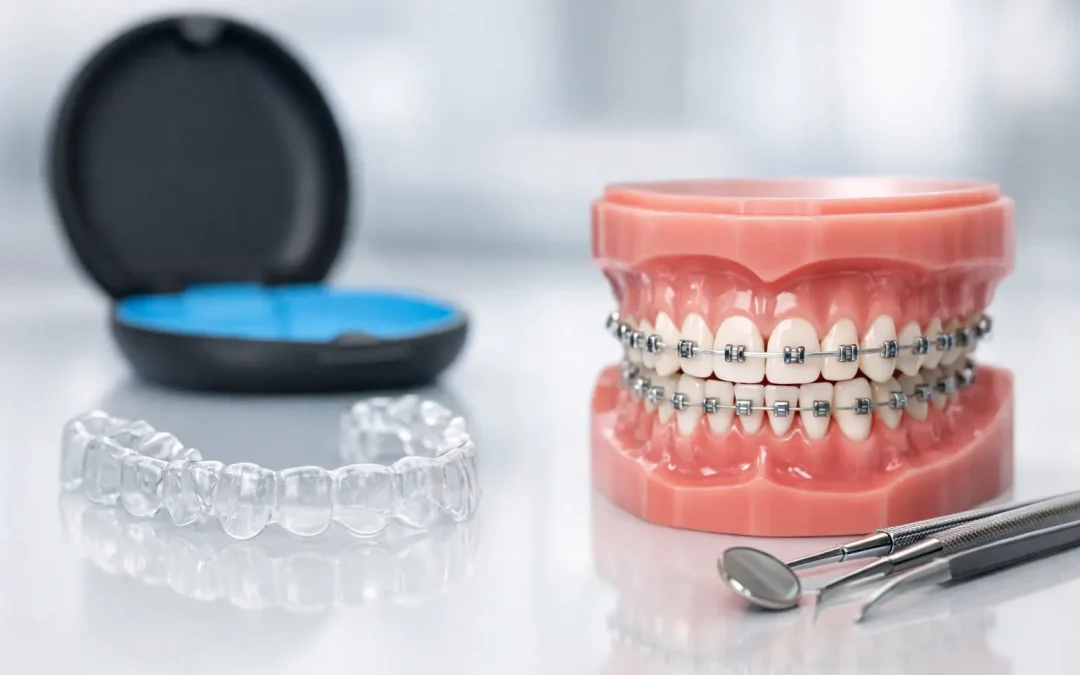
A lot of people start with one question and one question only – how much is this going to cost me? If you are comparing Invisalign vs braces cost, that makes sense. Straightening your teeth is a real investment, and the right choice is not always the cheapest one on paper.
The truth is that Invisalign and braces can overlap in price more than many people expect. In some cases, Invisalign costs a little more. In others, braces do. The final number depends less on the brand name of the treatment and more on what your teeth need, how complex the movement is, and how long treatment is likely to take.
Invisalign vs braces cost at a glance
For many adults and teens in the US, traditional braces often fall somewhere around $3,000 to $7,000, while Invisalign commonly ranges from about $3,500 to $8,000. Those are broad estimates, not fixed fees, but they give you a realistic starting point.
That overlap matters. People sometimes assume braces are always the budget option and Invisalign is always the premium option. In reality, simple Invisalign cases can be priced competitively, while more complex braces treatment can cost more because it takes longer and needs closer monitoring.
If you are only looking at the upfront quote, you may miss part of the picture. Follow-up visits, retainers, possible repairs, insurance benefits, and financing options can all affect what you actually pay over time.
What affects Invisalign vs braces cost
The biggest cost factor is case complexity. Mild crowding or spacing is usually more straightforward to treat than bite issues, rotated teeth, or teeth that need significant movement. The more planning, adjustment, and time involved, the higher the fee is likely to be.
Treatment length also matters. If your case can be completed in a shorter timeline, costs may stay lower. If your teeth need more gradual movement over many months, or even longer, the overall fee usually reflects that added clinical time.
Your provider’s experience, the technology used for planning, and your location can also influence pricing. A practice that uses detailed digital scans and customized treatment planning may not be the lowest sticker price, but many patients value the accuracy, comfort, and communication that come with that approach.
Then there is compliance. Invisalign only works as planned if you wear the aligners as directed. If trays are not worn enough hours each day, treatment can take longer, and refinement trays may be needed. That does not always mean extra fees, but it can affect the total value you get from treatment.
Why Invisalign can cost more
Invisalign uses a series of custom-made clear aligners, created from digital treatment planning. That level of customization is part of the reason the cost can be higher in some cases.
There is also the convenience factor. Many patients are willing to pay more for a treatment option that is less noticeable, removable for meals, and often easier to fit into work, school, and social life. If discretion matters to you, that added cost may feel worthwhile.
For adults especially, convenience has a value beyond appearance. Being able to remove aligners before an important meeting, a family event, or a photo can make treatment feel less stressful. That quality-of-life benefit is hard to put into a number, but it does influence how many people weigh the decision.
Why braces can cost more than expected
Braces are often seen as the standard, lower-cost option, but that is not always the full story. More involved braces cases may require longer treatment, additional appointments, or more complex bite correction. Those factors can push costs up.
There can also be extra practical costs. If a bracket breaks or a wire needs attention, you may need additional visits. Some patients also need to adjust their eating habits and oral hygiene routine more carefully, which is not a direct fee but can still affect the overall experience.
For children and teens, braces may still be the better value in some situations because they do not rely on the same level of day-to-day self-discipline as aligners. If a teen is likely to forget wearing trays, braces may lead to a more predictable result, even if the quoted price is similar.
Cost is only one part of the decision
A lower quote does not automatically mean better value. If one option fits your lifestyle more comfortably, helps you stay on track, and gives you confidence throughout treatment, that can make a meaningful difference.
Appearance is a common example. Some patients strongly prefer Invisalign because it is more discreet. Others do not mind braces at all, especially if they want a treatment that stays in place and does not need to be removed and reinserted throughout the day.
Comfort is another factor. Invisalign trays can feel smoother than brackets and wires, but they still apply pressure and require adjustment. Braces can sometimes irritate the cheeks or lips, especially early on. Neither option is completely hassle-free, so it helps to think honestly about what kind of day-to-day experience feels more manageable for you.
Insurance and payment plans can change the comparison
When patients ask about Invisalign vs braces cost, the out-of-pocket amount is usually what they really want to know. Dental insurance may cover orthodontic treatment in some cases, but coverage varies widely. Some plans contribute a set orthodontic benefit whether you choose braces or Invisalign. Others have age limits or treatment restrictions.
That is why a personalized quote matters more than online averages. The same treatment fee can feel very different depending on how much insurance contributes and whether monthly payment options are available.
Flexible financing can make either option more accessible. Many family-focused clinics now offer staged payments or third-party payment solutions so patients can start treatment without a large lump sum. For busy households balancing school costs, mortgage payments, and everyday expenses, that flexibility can be just as important as the total price itself.
Which option is usually better value?
If your case is mild to moderate and you know you will wear aligners properly, Invisalign can offer very strong value. You get a discreet treatment option, the freedom to remove trays for meals and brushing, and often a treatment experience that feels easier to manage in daily life.
If your case is more complex, or if you want a treatment that does not depend on remembering to wear trays, braces may offer better value. They can be extremely effective for difficult tooth movements and may provide more control in certain cases.
The key word is value, not just price. Two treatments can be close in cost but very different in suitability. A choice that matches your needs, habits, and goals is more likely to feel worth it from start to finish.
How to compare quotes the right way
When reviewing treatment estimates, ask what is included. A lower fee may not cover the same things as a slightly higher one. You will want to know whether the quote includes consultations, digital scans, routine adjustment visits, refinement trays if needed, and retainers after treatment.
It is also worth asking how long the estimate is expected to remain valid and whether there are circumstances that could change the fee. Clear communication matters here. A good dental team should be able to explain the treatment plan in plain language so you understand both the cost and the reason behind it.
At a patient-centered clinic such as Bulleen Dental, that conversation should feel calm and practical, not rushed or sales-driven. The goal is to help you understand your options clearly enough to make a confident decision.
So, is Invisalign cheaper than braces?
Usually, not by default. Sometimes Invisalign costs a bit more. Sometimes braces do. Often, they are close enough in price that the better question is which treatment suits your smile and your lifestyle best.
If you are comparing options for yourself or your child, the smartest next step is a professional assessment. That is the only way to know whether your case is simple, moderate, or more complex, and what that means for total cost.
A straighter smile should not feel confusing before treatment even begins. With clear advice, transparent pricing, and payment options that fit real life, the decision becomes a lot easier to make.