
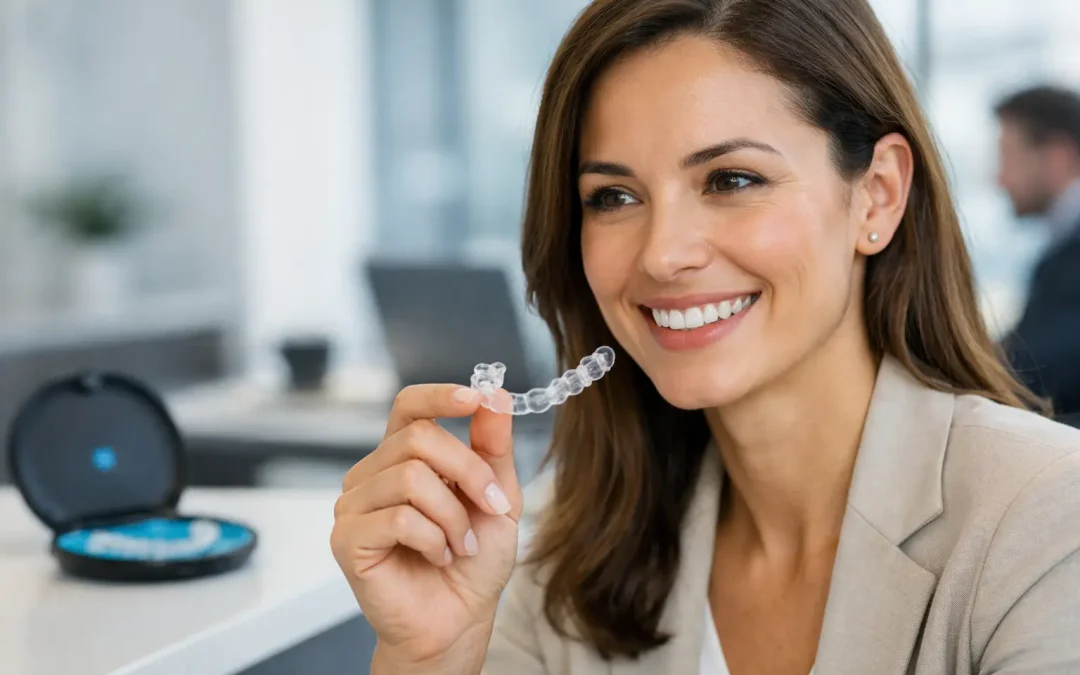
A presentation at 9 a.m., school pickup at 3 p.m., dinner to organize, and somehow you are also meant to make time for yourself. For many people, Invisalign for busy adults is appealing because it can straighten teeth without putting life on hold. Clear aligners are discreet, removable, and planned around your individual smile goals, but they still require consistency and regular professional care.
If you have been putting off orthodontic treatment because metal braces do not feel practical for your work or lifestyle, clear aligners may be worth discussing. The right choice depends on your teeth, bite, schedule, and willingness to wear the aligners as directed.
Why Invisalign for Busy Adults Can Be Practical
Invisalign treatment uses a series of custom clear aligners that gradually move teeth into their planned positions. Each set is worn for most of the day and night, then changed according to your dentist’s instructions. Because the aligners are clear, many adults feel more comfortable wearing them in professional and social settings than they would traditional braces.
The removable design is another major advantage. You take aligners out to eat and drink anything other than water, then brush your teeth before putting them back in. That means there are no food restrictions caused by brackets and wires. A client lunch, family celebration, or coffee meeting does not have to become an orthodontic problem.
Treatment is also designed with fewer interruptions in mind. Appointments are still necessary, but they are generally focused on checking progress, monitoring oral health, and providing the next stage of aligners. Your dentist will let you know how often you need to attend based on your treatment plan. It is a convenient approach, not a no-appointment approach.
The Commitment That Makes Clear Aligners Work
The freedom to remove aligners is helpful, but it is also where busy schedules can get in the way. Clear aligners must usually be worn for around 20 to 22 hours each day to work effectively. Taking them out for meals and brushing is expected. Leaving them out through a long meeting, an evening event, or a rushed morning can slow progress.
Think of aligners as part of your daily routine, much like wearing contact lenses or taking a prescribed medication. The treatment works through steady, gentle pressure over time. A few missed hours once in a while may happen, but frequent gaps can affect how well the next aligner fits and may extend treatment.
A small, practical setup can make a real difference. Keep your aligner case with you rather than wrapping aligners in a napkin, where they are easily lost. Carry a travel toothbrush and toothpaste in your work bag or car. Set a reminder on your phone after meals until reinserting aligners becomes automatic.
Eating, meetings, and everyday visibility
You may be able to speak normally soon after starting, although a slight lisp is possible while your mouth adjusts. For most people, this settles quickly with regular wear. If you have a major speaking engagement, starting treatment after the event may feel more comfortable. Your dentist can help you think through timing.
Clear aligners should be removed before eating. Drinking plain water while wearing them is generally fine, but hot drinks can warp the plastic and colored drinks may stain the aligners or trap sugar against teeth. This is one of the trade-offs for adults who regularly sip coffee, tea, or soft drinks throughout the workday. You may need to adjust your habits, rinse, or plan beverage breaks around your aligners.
Cleaning does not need to be complicated
Plaque and food particles can become trapped if aligners are put back onto uncleaned teeth. This can increase the risk of bad breath, cavities, and gum irritation, particularly if you already have areas that are difficult to clean.
Brush and floss as recommended by your dental team, and clean your aligners daily with a soft toothbrush and appropriate cleaning product. Avoid toothpaste with harsh abrasives, which can scratch clear plastic and make it look cloudy. Good hygiene protects more than the appearance of your aligners. It supports the healthy teeth and gums needed for successful orthodontic treatment.
Start With a Healthy Smile, Not Just a Straightness Goal
Adults often seek Invisalign because they want straighter front teeth. That can be an excellent goal, but a proper assessment should look beyond what is visible in photos. Crowding, spacing, worn teeth, bite alignment, gum health, past dental work, and jaw symptoms can all influence whether aligners are suitable and what treatment should involve.
Before beginning, your dentist may recommend treating tooth decay, gum disease, or other oral health concerns first. Moving teeth when gums are unhealthy is not a good shortcut. Starting with a stable foundation helps protect your result and your long-term dental health.
Some cases may need small tooth-colored attachments placed on certain teeth. These give aligners a better grip for specific movements. Attachments are usually discreet, but they are visible at close range and are worth factoring into your expectations. Some patients also need minor enamel shaping or space creation to achieve a balanced result.
Not every orthodontic concern is best treated with clear aligners alone. Complex bite problems, significant jaw discrepancies, or certain tooth movements may call for a different approach, additional treatment, or referral to an orthodontic specialist. A trustworthy recommendation should be based on what will give you a healthy, predictable outcome, not simply on choosing the most convenient option.
How Long Does Invisalign Take for Adults?
There is no single treatment timeline. Mild spacing or crowding may be addressed in a matter of months, while more involved tooth and bite changes can take a year or longer. Your personal treatment plan, how consistently you wear your aligners, and how your teeth respond all matter.
It is also common to need refinement aligners near the end of treatment. These are additional sets used to fine-tune tooth positions if the original movement does not track exactly as planned. Refinements are not necessarily a sign that something has gone wrong. Teeth are biological, and they do not always move with machine-like precision.
For a busy adult, the most useful question is often not, “How fast can this be done?” It is, “What routine can I realistically maintain until it is done?” A slightly longer plan that fits your life is usually more successful than an ambitious plan that is difficult to follow.
Planning Treatment Around Work and Family
A little forward planning reduces stress once treatment begins. Book checkups at times you are most likely to keep them, and mention any travel, major work deadlines, or family commitments during your consultation. If you travel often, ask how to manage aligner changes away from home and what to do if an aligner is lost or damaged.
Keep your previous aligner set unless your dentist tells you otherwise. If the current set is lost, the previous one may help hold teeth in position while you contact the clinic for advice. Do not jump ahead to another set without guidance, even if your calendar feels tight.
At Bulleen Dental, treatment planning is approached as a conversation. Your dentist can explain what clear aligners can realistically achieve, the care involved, likely appointment needs, and the financial options available to you. Clear information matters, especially when you are balancing treatment with a full calendar.
Retainers Protect the Time You Invest
Straightening treatment does not end the day you finish your last aligner. Teeth naturally tend to shift over time, which is why retainers are an essential part of maintaining your new smile. Your dentist will advise how and when to wear them based on your needs.
For adults who have invested time, attention, and money into treatment, retainer wear is the simple habit that helps keep the result from drifting. Add it to your bedtime routine, store it safely when it is not in use, and bring it to dental visits if you have concerns about fit.
A busy schedule does not mean your smile goals need to wait indefinitely. The best next step is a calm, professional assessment that considers your oral health, your priorities, and the routine you can genuinely sustain. With the right plan and consistent wear, clear aligners can be a practical way to care for your smile while continuing with the life you already lead.