
A missing tooth can affect more than the way a smile looks. It can make chewing less comfortable, change how you speak, and leave neighboring teeth without the support they need. This guide to dental implants explains what treatment involves, who may be a good candidate, and how to approach the decision without feeling rushed or overwhelmed.
Dental implants are a long-term tooth replacement option designed to look, feel, and function much like natural teeth. They are not the right choice for every person or every situation, but for many patients, they offer a dependable way to restore comfort, confidence, and daily function.
What Is a Dental Implant?
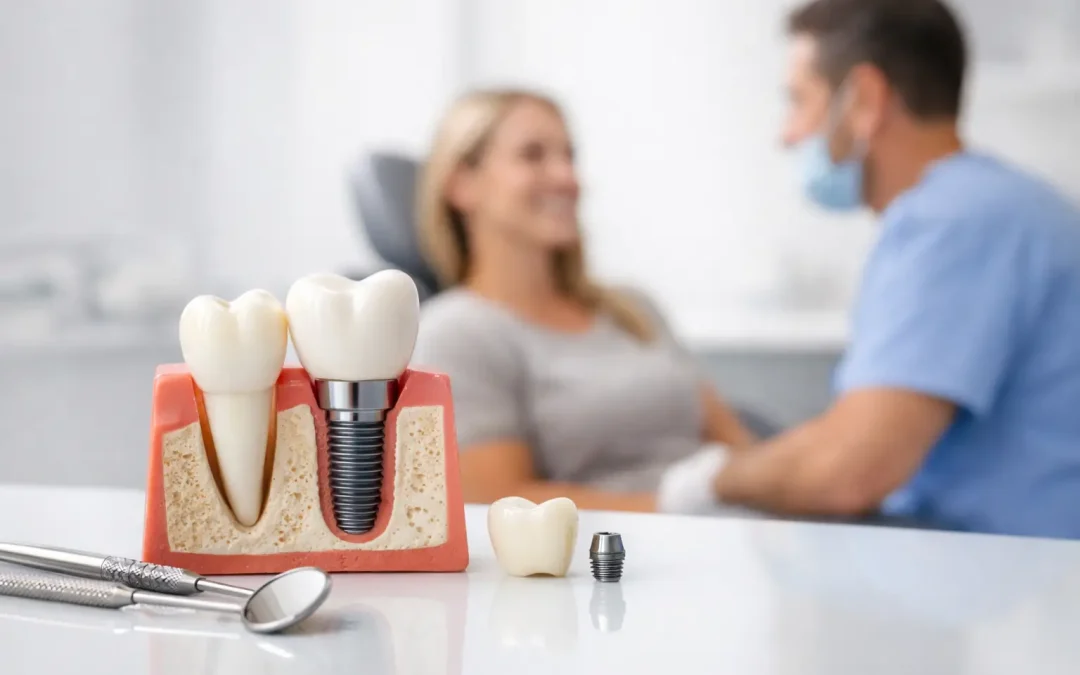
A dental implant replaces the root of a missing tooth. It is a small post, usually made from titanium, that is placed in the jawbone. Over time, the bone can heal around the implant in a process called osseointegration, creating a stable base for a replacement tooth.
Once the implant has healed sufficiently, your dentist attaches an abutment, which is the connector between the implant and the final restoration. A custom crown is then placed on top for a single missing tooth. Implants can also support a bridge when several teeth are missing, or help hold a full denture securely in place.
The final crown is carefully shaped and shaded to suit your smile. While an implant is a highly advanced restoration, good results still depend on thoughtful planning, healthy gums, and consistent care at home.
Why People Choose Dental Implants
The main benefit of an implant is stability. Unlike a removable denture, an implant is fixed in the jaw, so it does not shift while you eat or speak. Unlike a traditional bridge, an implant may replace a missing tooth without requiring the teeth on either side to be reshaped for crowns.
Many patients also appreciate the natural feel. After healing, chewing can feel more secure, and the replacement tooth is cared for much like a natural tooth. The implant also helps stimulate the jawbone where the tooth root was lost. This can help limit the bone changes that sometimes occur after tooth loss.
That said, implants are not automatically the best solution simply because they are fixed. They involve surgery, healing time, and a greater upfront investment than some alternatives. A bridge or well-designed denture may be the more practical choice depending on your oral health, timeline, budget, and personal preferences. A patient-centered consultation should make room for all of those factors.
Are You a Candidate for Dental Implants?
Many adults with one or more missing teeth can be considered for implant treatment. The key question is not just whether a tooth is missing, but whether the gums and bone can support an implant safely and predictably.
Your dentist will assess the health of your gums, the amount and quality of jawbone, your bite, and the condition of nearby teeth. X-rays and, in many cases, 3D imaging help the dental team plan the position of the implant with greater precision. Your medical history matters as well. Conditions that affect healing, certain medications, smoking, and uncontrolled gum disease may influence the treatment plan.
A lack of bone does not always rule out implants. Some patients may be suitable for bone grafting, which builds or supports the area before implant placement. This adds time and cost, so it is worth discussing whether the expected benefit fits your priorities. In other cases, a different tooth replacement option may provide a better path forward.
A Guide to Dental Implant Treatment, Step by Step
Every treatment plan is individual, but the process commonly follows several stages.
Consultation and planning
Your first visit is a chance to talk about what you want to change and what concerns you most. You may be focused on a visible gap, difficulty eating, a loose denture, or a tooth that can no longer be saved. Your dentist will examine your mouth, take the necessary images, and explain the options in plain language.
This is the time to ask practical questions. How many appointments are likely? Will a temporary tooth be needed? What discomfort should you expect? What are the alternatives? Clear answers help you make an informed choice rather than feeling pressured into a particular treatment.
Preparing the site
If a damaged tooth needs to be removed, the site may need time to heal before an implant is placed. Sometimes an implant can be placed at the same appointment as an extraction. Whether this is appropriate depends on infection, bone support, tooth position, and the stability the dentist can achieve at placement.
Some patients need a bone graft or gum treatment first. Although this can make the process longer, preparation is often what supports a more reliable result later.
Implant placement
Implant surgery is usually completed using local anesthetic, so the area is numb during the procedure. Patients who feel particularly anxious should tell their dental team early. A gentle approach, extra time to talk through the process, and appropriate sedation options can make a significant difference to the experience.
After the implant is placed, it needs time to integrate with the jawbone. Healing times vary. Some patients receive a temporary restoration during this period, while others wait until the implant is ready for its final crown.
Final restoration
When the implant is stable and the surrounding tissues are healthy, impressions or digital scans are used to create the crown, bridge, or implant-supported denture. The goal is not only an attractive result. Your dentist also checks bite forces, fit, speech, and how easily you can keep the restoration clean.
What Healing Feels Like
Most people experience some tenderness, swelling, or bruising for a few days after implant placement. This is usually manageable with the aftercare advice and medication recommendations provided by the dental team. Softer foods may be more comfortable at first, and good oral hygiene remains essential while the area heals.
Call your dentist if pain becomes more severe rather than improving, if swelling continues to worsen, or if you have concerns about bleeding, fever, or the way the site looks. It is always better to ask a question early. A caring dental practice will want to know how you are recovering.
Healing is not only about waiting. Follow-up visits allow your dentist to monitor the implant and surrounding gums. Keeping these appointments helps identify small concerns before they become more difficult to manage.
Dental Implant Costs and Planning Your Budget
The cost of dental implants varies because treatment is built around your individual needs. A straightforward single-tooth implant is different from a case involving an extraction, grafting, multiple implants, or an implant-supported denture. The final restoration and the diagnostic planning involved also affect the overall fee.
A written treatment plan should clearly explain what is included, what may be additional, and when payments are due. If affordability is a concern, ask about staged treatment and available payment options. There is no value in pretending cost is not part of the decision. Good care means discussing it honestly, alongside the expected longevity and benefits of each option.
Caring for an Implant Long Term
An implant cannot develop a cavity, but the gum and bone around it still need protection. Brushing twice daily, cleaning between teeth, and attending regular dental checkups are all essential. Your dentist may recommend a specific interdental brush, flossing method, or water flosser depending on the shape of your restoration.
Gum inflammation around an implant can progress if it is not treated. Early changes may be painless, which is why professional monitoring matters. If you grind your teeth, a protective night guard may also be recommended to reduce excessive pressure on the implant and crown.
With attentive care and regular reviews, dental implants can be a valuable long-term investment in your smile and comfort. The best next step is a calm conversation with a dentist who will listen to your concerns, assess your needs carefully, and help you choose a solution that feels right for your health, lifestyle, and budget.