
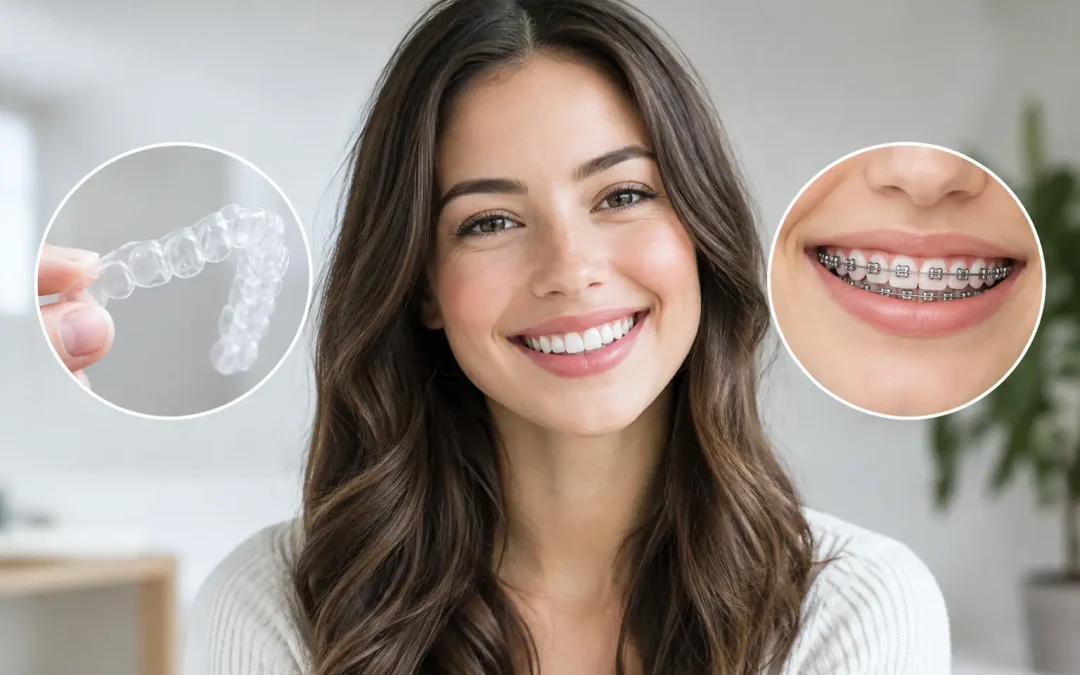
A crowded lower tooth, a gap that shows in photos, or a bite that feels slightly off can lead to the same question: aligners versus braces, which is right for me? Both treatments can create a healthier, more confident smile. The better choice depends on what needs to move, how much flexibility you need day to day, and what you will realistically feel comfortable maintaining.
At Bulleen Dental, we believe orthodontic treatment should feel clear and manageable from the first conversation. A personalized assessment helps us look beyond appearance to consider your bite, gum health, treatment goals, and lifestyle.
Aligners Versus Braces: The Main Difference
Clear aligners are custom-made, removable trays that fit over your teeth. You wear each set for a prescribed period before moving to the next set, gradually guiding teeth into their planned positions. Because they are clear and sit closely against the teeth, they are a popular option for adults and teens who prefer a more discreet treatment.
Braces use brackets bonded to the teeth and a wire that is adjusted over time. They are fixed in place throughout treatment, so they apply steady force without relying on you to remember to wear them. Modern braces are much smaller and more comfortable-looking than many people expect, and they remain an excellent option for a wide range of orthodontic concerns.
Neither option is automatically better. Aligners offer freedom and discretion, while braces offer constant treatment control. The right choice comes down to the complexity of your case and the routine you can commit to.
When Clear Aligners May Be a Good Fit
Clear aligners can be effective for many common concerns, including mild to moderate crowding, spacing, and certain bite problems. They can also be a good option for people who had braces years ago and have noticed their teeth shifting over time.
The ability to remove aligners is often their biggest advantage. You can take them out for meals, brush and floss normally, and remove them briefly for an important occasion. There are no brackets or wires to rub against the cheeks, and there are fewer food restrictions than with braces.
That flexibility comes with responsibility. For aligners to work as planned, they generally need to be worn for about 20 to 22 hours each day. Taking them out frequently, forgetting to put them back after meals, or losing trays can slow progress. They are a strong choice for someone who is organized and motivated, but may be less suitable for a younger child or anyone who knows consistency will be difficult.
Aligners may also require small tooth-colored attachments to help guide certain movements. These are discreet, but they mean aligner treatment is not always completely invisible. Depending on your needs, your dentist may also recommend small spaces between teeth or other supporting treatments to achieve a stable result.
Daily life with aligners
Most people settle into an aligner routine quickly. You remove the trays before eating or drinking anything other than water, then brush your teeth before putting them back in. This helps reduce the chance of trapping food and sugar against the teeth.
You will also need to clean the aligners daily and store them safely in their case whenever they are out. Wrapping trays in a napkin is a common reason they are accidentally thrown away. For patients with busy workdays, school schedules, or frequent coffee breaks, it is worth considering whether this routine feels practical before making a decision.
When Braces May Be the Better Choice
Braces are often recommended when teeth need more complex movement or when there are significant bite concerns. Because brackets and wires are fixed to the teeth, your dentist has precise, continuous control over how each tooth moves. Braces can be particularly helpful for more pronounced crowding, rotated teeth, larger gaps, and some jaw or bite relationships.
They can also remove the pressure of remembering to wear appliances. Once braces are on, they are working around the clock. This is a meaningful advantage for children and teens who may struggle to keep aligners in for the required amount of time, as well as adults who would rather have a treatment that does not depend on daily decisions.
The trade-off is that braces require more care while eating and cleaning. Hard, sticky, or chewy foods can damage brackets and wires, so certain snacks may need to be avoided. Brushing takes more attention, and flossing usually involves a floss threader or another orthodontic cleaning aid. Regular hygiene visits are especially valuable during treatment to help keep teeth and gums healthy.
Comfort and appearance with braces
Braces can feel tender for a few days after they are fitted or adjusted, just as new aligners can create temporary pressure. Wax can help if a bracket rubs against your cheek while your mouth adjusts. If a wire becomes loose or uncomfortable, it is best to contact your dental team rather than trying to fix it yourself.
Traditional metal braces are visible, but many patients feel more comfortable with the appearance than they expected. For some people, being able to see the treatment working is reassuring. Braces can also be a practical option when the desired result requires a higher level of fixed control.
Treatment Time, Cost, and Follow-Up Care
Treatment time varies widely. Some straightforward aligner cases may take several months, while more complex orthodontic treatment can take longer than a year or two. Braces and aligners can both be efficient when they are matched to the right case and followed as directed. Trying to choose based on the shortest estimated timeline alone can lead to disappointment.
Costs also vary based on the complexity of tooth movement, the type of appliance, the number of appointments required, and whether additional dental care is needed first. A clear written treatment plan makes it easier to understand what is included and to discuss payment options. Affordability matters, but treatment should also be planned for a result that is healthy, functional, and likely to last.
Follow-up visits are part of both options. With braces, appointments are used to check progress and adjust the wire system. With aligners, visits allow your dentist to monitor movement, provide new sets of trays, and make changes if teeth are not tracking as expected. These check-ins protect your oral health and help keep your treatment on course.
Your Bite and Oral Health Matter as Much as Straight Teeth
A straighter smile is often the visible goal, but orthodontic treatment is about more than appearance. Teeth that fit together well can be easier to clean and may distribute biting forces more evenly. However, moving teeth should only begin after active decay, gum disease, or other dental concerns have been addressed.
Before recommending braces or aligners, your dentist should assess your teeth, gums, jaw relationship, and existing dental work. Crowns, bridges, implants, and untreated grinding can affect which approach is appropriate. In some cases, orthodontic treatment may be part of a broader plan that includes restorative or cosmetic care.
Retainers are equally important after either treatment. Teeth naturally have a tendency to shift over time, especially in the months after active orthodontic treatment ends. Wearing retainers as instructed is what helps protect the time, effort, and investment you have made in your smile.
How to Make the Decision Feel Simpler
Start by thinking honestly about your routine. If being able to remove your appliance for meals and photos matters most, and you can reliably wear trays nearly full-time, aligners may suit you well. If you want treatment that stays in place and may offer more control for complex tooth movements, braces may be the stronger option.
There is no need to decide based on what worked for a friend or what looks best online. A calm, thorough consultation can give you a realistic picture of what each option can achieve for your specific smile. The best orthodontic choice is the one that supports your oral health and feels achievable in your everyday life.